5 August 2026



Quick answer: Tikkie works well for one-off repayments after the fact. But when you need your hockey team to contribute upfront, track who has paid, and keep a shared pot growing over the season, Potje is the better fit.
You've been there.
The tournament is booked. The away trip is confirmed. The new kit order is going in next week.
And then the WhatsApp messages start.
"Can you send me a Tikkie for the kit?" "Oh, I'll pay you back after the match." "Sorry, I missed the message. What do I owe again?"
Managing money for a hockey team sounds simple. It never is. Someone always pays late, someone forgets, and the team captain ends up fronting cash they shouldn't have to.
The question isn't just which app to use. It's whether you want to keep chasing people after the money is already spent, or collect it before it becomes a problem.
That's the real difference between Tikkie and Potje.
What Tikkie Actually Does Well
Tikkie is a payment request app built by ABN AMRO. It has over 8 million users in the Netherlands and is genuinely excellent at what it was designed for: quick, frictionless repayments between individuals.
Send a link via WhatsApp. Your teammate pays via iDEAL. Done.
It also has a feature called Groepie, which lets you track shared group expenses and settle up at the end. For a weekend away where one person pays the Airbnb and another buys the food, that works well enough.
Where Tikkie fits for hockey teams
Splitting a one-off cost after someone already paid
Reimbursing a teammate who covered dinner or drinks
Quick individual payments for a single event
The key word is "after." Tikkie is a repayment tool. Money moves once something has already been spent. Someone in your group carries the cost first, and then everyone else pays them back.
For a single match or a small group, that's fine. For a full hockey team managing a season's worth of costs, it creates a recurring problem.
The Real Problem: Not Everyone Pays Right Away
Here's what actually happens in most hockey teams.
The captain books the tournament. The cost is split across 15 players. A Tikkie goes out. Six people pay within 24 hours. Three pay a week later. Two pay after a reminder. And two people somehow never pay at all.
The captain has either fronted the money themselves, or the team is short and someone has to cover the gap.
This isn't a Tikkie problem specifically. It's a fundamental issue with any tool that requests payment after the fact: it puts the financial burden on one person and turns collecting money into a social minefield.
The average sports team treasurer spends hours per month chasing late payments. That time adds up fast over a full season of tournaments, kit orders, club trips, and social events.
The underlying issue is the approach itself:
Approach | When money moves | Who carries the risk |
Tikkie / repayment model | After the cost is incurred | The person who paid upfront |
Potje / contribution model | Before spending begins | Nobody. The group funds it together. |
The contribution model doesn't just save time. It removes the awkwardness entirely. Nobody owes anyone anything, because everyone already contributed.
How Potje Works for Hockey Teams
Potje is a shared money pot built for exactly this kind of situation.
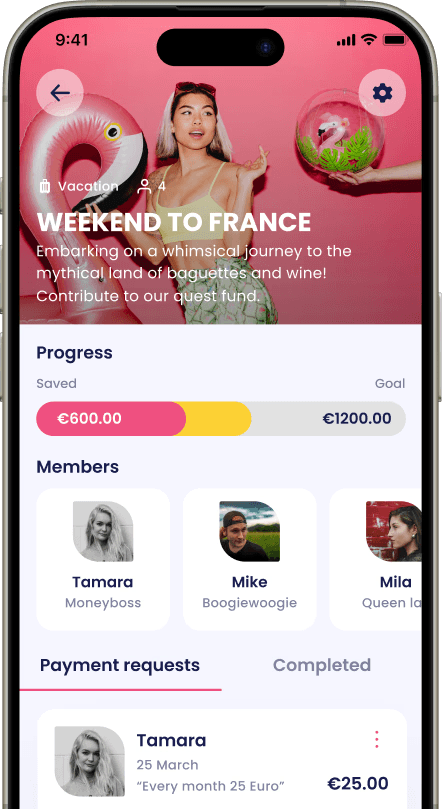
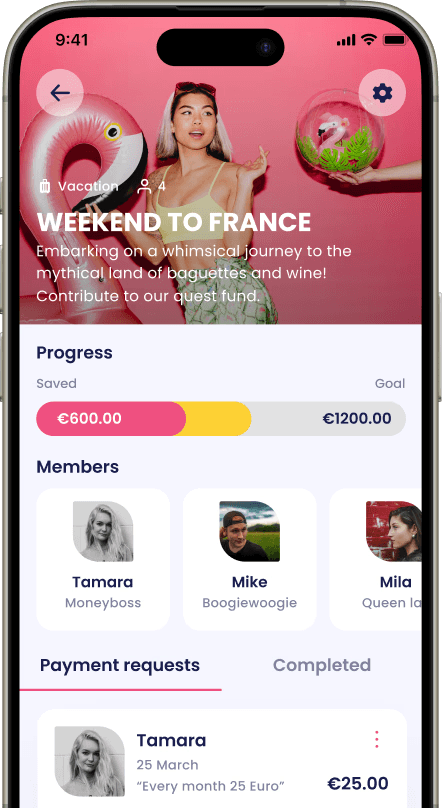
Instead of paying someone back after the fact, your team contributes to a shared pot before the money gets spent. The pot has a goal, everyone can see the progress, and automated reminders go out so you don't have to send awkward WhatsApp messages yourself.
Setting up a team pot
One person creates the pot and sets the goal amount (for example: "Tournament Trip - €600")
A payment link is shared with the team via WhatsApp or email
Each player contributes their share directly into the pot
Once the goal is reached, the money is there and ready to use
No one person carries the financial risk. No one is waiting on transfers. The team captain isn't personally out of pocket while chasing teammates.
What a hockey team can use Potje for
Tournament fees - collect contributions before registering, not after
Kit orders - set a pot goal, collect from everyone, then place the order
Away trips - accommodation, travel, and food all funded upfront
End-of-season events - team dinners, celebrations, or club socials
Fines pot - a running pot for late arrivals, missed training, or yellow cards
Potje costs €5.00 per month total, split automatically across the group. For a team of 10, that's €0.50 each per month. For a team of 5, it's €1.00 each. The cost is shared, not carried by one person.
You can read more about how a shared money pot works and what features actually matter in a group money app if you want to dig deeper before deciding.
Tikkie vs Potje: Side-by-Side for Hockey Teams
Feature | Tikkie | Potje |
Payment model | Repayment after spending | Contribution before spending |
Group size | Works for any size | Built for groups |
Automated reminders | No | Yes |
Shared goal tracking | No | Yes |
One person carries cost upfront | Yes | No |
Best for | One-off repayments | Ongoing team money management |
The honest take
Tikkie is not a bad app. For splitting a post-match pizza or getting someone to pay you back for a train ticket, it's fast and frictionless.
But for a hockey team that has recurring costs across a full season, Tikkie creates a pattern where someone is always fronting money and then chasing it back.
Potje flips that pattern. The money is collected first. The goal is visible to everyone. And the automated reminders mean you're not the one sending awkward follow-up messages on a Tuesday night.
If your team regularly asks "why hasn't everyone paid yet?", that's the signal you need a contribution model, not another payment request.
Frequently Asked Questions
Can I use Tikkie for recurring team payments?
You can send a Tikkie for each individual cost, but there's no built-in way to manage a recurring shared goal or track contributions over time. You'd be sending a new payment request for every expense, with no overview of who has contributed to what.
Does everyone need to download the Potje app?
Only the person creating the pot needs the Potje app. Other team members can contribute via a shared payment link, making it easy even for teammates who don't want another app on their phone.
What happens if someone doesn't pay into the Potje?
Potje sends automated reminders to people who haven't contributed yet. You can see exactly who has paid and who hasn't, without having to check manually or send messages yourself.
Is Potje safe for group money?
Yes. Potje is a regulated platform for group money management in Europe. You can read more about how Potje keeps group money safe and trustworthy.
Can our team use Potje for more than one goal at a time?
Yes. You can run multiple pots at the same time, so your team could have one pot for the upcoming tournament, another for the end-of-season trip, and a separate fines pot all running in parallel.
Ready to Stop Chasing Your Teammates?
The best team treasurers aren't the ones who send the most reminders. They're the ones who set up a system that means reminders are rarely needed.
If your hockey team has more than one shared expense per season, a dedicated money pot will save you time, reduce friction, and make sure no one person ends up carrying costs for everyone else.
Start your team's money pot with Potje and collect contributions before the next tournament, kit order, or away trip.
If you're saving up as a group for a trip, event, or gift, Potje makes it easy to collect money into one shared digital pot instead of chasing people for their share. Start a pot through this link and get your first month free. After that it's €5 a month per pot, taken straight from the pot balance, so there's nothing to pay upfront to start saving together.

Social Accountability and Saving: The Missing Link to Financial Freedom
Ondersteuning voor verschillende inhoudstypes zoals artikelen, blogs, video's en meer. Rijke tekstverwerker met opmaakopties voor verbeterde.
17 november, 2025

Group Saving Apps Compared: What's Easiest, Safest, and Most Transparent?
Ondersteuning voor verschillende inhoudstypes zoals artikelen, blogs, video's en meer. Rijke tekstverwerker met opmaakopties voor verbeterde.
17 november, 2025

Group Money Platforms Compared: What’s Safe, Regulated, and Fair?
Ondersteuning voor verschillende inhoudstypes zoals artikelen, blogs, video's en meer. Rijke tekstverwerker met opmaakopties voor verbeterde.
17 november, 2025